


Spring has arrived, and with it, countless families are welcoming a new bunny into their homes. Whether your pet rabbit was an Easter surprise or a planned addition, the first weeks set the foundation for years of companionship. This guide covers everything from the first 48 hours to long-term planning, with a dedicated section for boarding facilities and daycares looking to expand their small-animal services.
Spring 2026 has arrived, and with it, countless families are welcoming a new bunny into their homes. Whether your pet rabbit was an Easter surprise or a planned addition, the first weeks set the foundation for years of companionship. This guide covers everything from the first 48 hours to long-term planning, with a dedicated section for boarding facilities and daycares looking to expand their small-animal services.

Gentle Reality Check: Is a New Pet Bunny Right for Your Family?
Many families bring home rabbits between March and April without fully grasping what bunny care entails. Unlike hamsters or goldfish,rabbits can live 8-12 years (sometimes longer), making this commitment comparable to adopting dogs or cats.
Rabbits are crepuscular animals, meaning they’re most active at dawn and dusk. While they can adapt somewhat to household schedules, expect peak energy during early morning and evening hours. This makes them surprisingly compatible with working families who have time before and after typical workdays.
Parents should involve children in age-appropriate tasks like filling water bowls or offering treats, but adults must remain the primary caregivers. Rabbits need consistent routines and thrive under stable care from responsible adults who understand their needs.
If your home is currently chaotic with travel plans, renovations, or major life changes, consider delaying adoption until things settle. Your future bunny will thank you.
First 48 Hours With Your New Bunny
The initial days are crucial for helping your new pet rabbit adjust. Most rabbits arrive stressed from transport, new environments, and unfamiliar scents.
Day 1 checklist:
- Set up a quiet safe space before the rabbit arrives. a 4x4 foot large exercise pen works well
- Include a litter box, unlimited timothy hay, and fresh water in both a water bottle and water bowls
- Limit handling entirely; let the bunny explore at its own pace
- Preserve any soiled bedding from transport to help mark territory
Days 1-2 bonding approach:
- Sit on the floor near the pen and speak softly
- Offer a small piece of romaine lettuce or cilantro by hand
- Avoid reaching into the enclosure from above (this mimics predators)
Normal settling signs include curious sniffing, self-grooming, steady hay consumption, and regular round, dry droppings. Red flags requiring veterinary attention include not eating for 8-12 hours, tiny or absent droppings, or unusual lethargy.
Schedule a welcome exam with a rabbit savvy veterinarian within 7-10 days, especially if your bunny came from pet stores, markets, or unverified sources.
Rabbit Basics: Behavior, Temperament, and Daily Needs
Understanding that rabbits are prey animals changes everything about how you interact with them. They scare easily from loud noises and sudden movements but form remarkably deep bonds once they feel secure.
Key body language to recognize:
- Binkies (joyful leaps and twists) = pure happiness
- Relaxed flops onto their side = complete contentment
- Tooth purring during petting = pleasure
- Thumping hind legs = alarm or perceived danger
- Wide eyes, flattened ears, hiding = stress
Most rabbits need several hours of daily interaction and exercise outside their enclosure. Unlike wild rabbits that live in complex burrow systems with constant stimulation, domestic rabbits depend on you for mental engagement.
Their natural behaviors include powerful chewing and digging instincts that must be channeled into safe outlets. Without appropriate chew toys and digging opportunities, rabbits often turn to destructive habits like attacking baseboards or furniture.
Many rabbits prefer head and cheek pets over being picked up, especially initially. Building trust happens at floor level, not by lifting them into the air.
Essential Spring 2026 Bunny Setup: Housing, Bedding, and Litter
Post-Easter families should prioritize creating a proper rabbit home over cramped decorative hutches or tiny cages. The right setup directly impacts your rabbit’s health and happiness.
Housing requirements:
- Minimum 16 square feet (4 ft × 4 ft) exercise pens for average adults
- Additional daily free roam time of 3–5 hours
- Solid flooring with washable rugs or mats (avoid wire floors that cause sores)
- Placement in cool areas: 60–70°F (16–21°C), away from direct sunlight and drafts
- Never above 80°F (27°C)—rabbits overheat easily and can suffer heatstroke
Safe bedding options:
- Paper-based bedding like CareFresh
- Soft fleece liners (washable)
- Avoid cedar shavings and wood shavings with aromatic oils—these irritate respiratory systems
Litter box training setup:
- Use a large, open litter box (bigger than you think necessary)
- Fill with paper-based litter, NOT clumping cat litter
- Top with a thick layer of timothy hay or orchard grass
- Rabbits prefer to eat and eliminate in the same spot, making training surprisingly straightforward

Safe Indoor & Outdoor Play: Bunny-Proofing for Curious Rabbits
Rabbits are explorers with powerful jaws evolved to keep ever-growing teeth ground down. This means everything in their environment becomes a potential chew target.
Indoor bunny proof essentials:
- Encase electrical cords in split-loom tubing or plastic covers
- Keep chargers unplugged when not in use
- Store shoes, bags, books, and children’s toys in closed cupboards
- Remove or relocate toxic plants (lilies, philodendron, dieffenbachia)
- Place traction mats on slippery floors to prevent injuries
Outdoor play guidelines:
- Use fully enclosed, shaded runs on pesticide-free grass
- Maintain constant supervision—never leave rabbits unattended even for a few minutes
- Check for local predators: hawks, foxes, neighborhood dogs and cats
- Ensure no access to wild rabbits (disease transmission risk)
Even indoor free roam sessions require supervision. A few hours of bunny-proofed exploration time daily satisfies their need for exercise and mental stimulation.
Diet & Nutrition: Building a Hay-Centered Menu
The most important thing to understand about your rabbit’s diet is that grass hay should comprise roughly 80% of daily intake. Unlimited amounts of timothy hay, orchard grass, or meadow hay must be available at all times.
Transitioning Easter bunnies: If your rabbit arrived on a mixed or unknown diet, transition gradually over 7–10 days to prevent digestive upset.
Daily feeding guidelines:
|
Food Type |
Amount |
Notes |
|---|---|---|
|
Grass hay |
Unlimited |
Timothy, orchard grass, meadow hay |
|
Pellets |
~1/4 cup per 5 lbs body weight |
Plain varieties only—no seeds, nuts, or colorful bits |
|
Leafy greens |
1 cup per 2 lbs body weight |
Introduce one type weekly |
|
Treats |
Teaspoon per 2 lbs body weight |
Occasional only |
Safe leafy greens to feed your bunny:
- Romaine lettuce (never iceberg)
- Cilantro
- Basil
- Parsley
- Carrot tops
Fruits and starchy vegetables contain too much sugar for daily feeding. Carrots, bananas, and seedless apples should be rare treats, not dietary staples.
Special considerations:
- Young rabbits under 12 weeks may need alfalfa hay temporarily
- Baby bunnies have sensitive digestion—avoid fresh greens until 3 months
- Unspayed females and growing rabbits may need adjusted portions
- Always ensure rabbits stay hydrated with constant access to fresh water
Springtime Health & Vet Care: Staying Ahead of Problems
Many new bunnies acquired between March and May 2026 arrive with unknown histories. Prompt veterinary attention catches problems early.
Finding the right vet: Not all veterinarians specialize in lagomorphs. Seek out a rabbit savvy veterinarian who understands the unique physiology of these animals. Standard dog and cat vets may miss subtle signs of illness.
Vaccination priorities: RHDV2 (Rabbit Hemorrhagic Disease Virus type 2) is now endemic in North America, UK, EU, and Australia. Where vaccines are approved, annual boosters are essential. Discuss this at your first appointment.
Daily health indicators to monitor:
- Bright, alert eyes
- Clean nose (no discharge)
- Constant hay eating
- Stable body weight
- Round, dry droppings
- Normal crepuscular energy patterns
Emergency warning signs requiring immediate attention:
- Not eating for 8–12 hours (gastrointestinal stasis is life-threatening)
- Few, small, or absent droppings
- Sudden lethargy
- Labored breathing
- Head tilt
- Severe diarrhea
Rabbits are masters at hiding pain—a survival instinct from being prey animals. By the time symptoms become obvious, conditions may be critical. Always contact a vet early rather than adopting a “wait and see” approach.

Grooming, Handling, and Gentle Bonding
Daily handling builds trust while keeping your rabbit comfortable and healthy.
Grooming basics:
- Brush weekly for short-haired breeds
- Brush several times weekly for long-haired breeds during spring/autumn molts
- Never fully bathe rabbits—spot clean with damp cloths if needed
- Loose fur ingested during grooming can cause dangerous blockages (unlike cats, rabbits can’t vomit)
- Keep nail clippers handy for regular trims, or have your vet demonstrate proper technique
Safe handling techniques:
- Always support hind ends and spine
- Hold close to your body at floor level initially
- Never grab from above—this mimics predator attacks
- Avoid touching tail areas, which most rabbits dislike
Bonding routines:
- Schedule quiet floor time daily
- Offer hand-fed fresh greens as trust builders
- Pet the forehead and cheeks gently until you hear tooth purring
- Let the rabbit come to you rather than chasing them
Enrichment: Keeping Your Bunny Happy and Mentally Stimulated
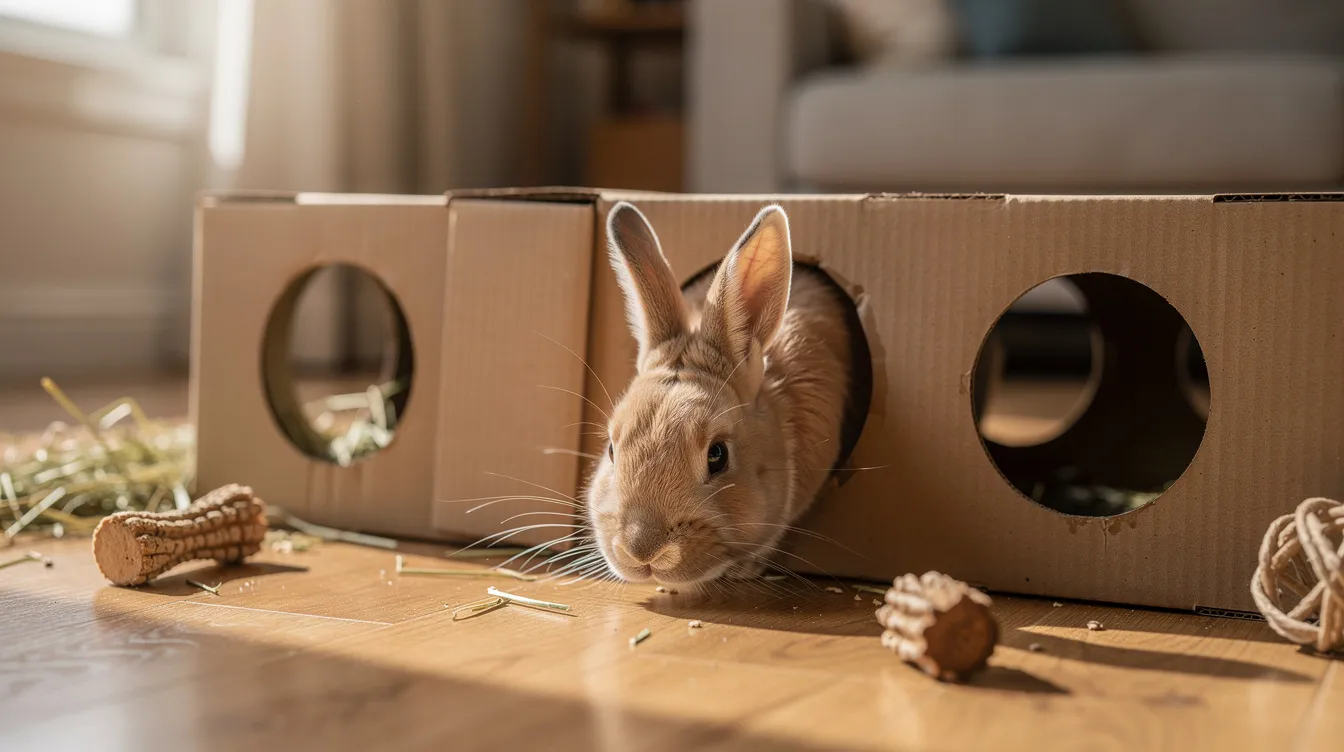
Rabbits love problem-solving and exploration. Without adequate stimulation, boredom leads to destructive behavior and depression.
DIY enrichment ideas:
- Cardboard boxes with cut entry holes
- Paper tunnels and shredded paper dig pits
- Untreated apple or willow sticks for chewing
- Woven grass mats to shred
- Commercial rabbit-safe toys (avoid soft plastic and painted wood)
Foraging games:
- Scatter pellets throughout hay to encourage natural foraging
- Hide leafy greens in paper bags
- Create simple cardboard puzzle feeders
Some rabbits enjoy clicker training for basic targeting or coming when called. This strengthens the human-rabbit bond while satisfying their intelligent, curious nature.
Special Considerations for Baby Bunnies (Under 12 Weeks)
While most rescues adopt out rabbits around 8–12 weeks, some families receive younger kits from breeders or unplanned litters. These young rabbits require extra vigilance.
Feeding adjustments:
- Very young rabbits have fragile digestion
- May need different hay and pellet balances (consult a knowledgeable vet)
- Avoid fresh produce until approximately 3 months old
- Alfalfa hay is appropriate for growing rabbits but should be transitioned to timothy hay as they mature
Handling approach:
- Keep sessions brief and positive
- Focus on making human contact pleasant, not forcing cuddles
- Avoid overwhelming with too much stimulation
Sudden diet changes and stress can quickly trigger diarrhea or gastrointestinal stasis in youngsters. If either occurs, seek immediate veterinary help—don’t wait overnight.
Discuss spay/neuter timing early. Many vets recommend neutering male rabbits around 4–5 months and spaying female rabbits around 5–6 months, depending on size and health. Early sterilization prevents uterine cancer in females (which affects up to 80% of unspayed females over age 4) and reduces territorial behaviors in both sexes.
Supporting Pet-Care Providers: Boarding, Daycare, and Grooming
As rabbit ownership grows, boarding kennels, pet hotels, groomers, and daycares increasingly accept rabbits—especially during school holidays and summer 2026, making it vital to prioritize stress-free environments in pet care facilities.
Facility requirements for rabbit boarding:
- Quiet, climate-controlled rooms (60–70°F) away from barking dogs and other pets
- Secure exercise pens with solid flooring (no wire bottoms)
- Proper ventilation without drafts
- Access to natural light cycles
Intake best practices:
- Collect detailed diet specifics (exact rabbit food brands, hay types, treat preferences)
- Document medication schedules and administration methods
- Record preferred handling techniques and stress triggers
- Note whether the rabbit is bonded with another rabbit (two rabbits may need to stay together)
Streamlining operations with software: Pet-care management platforms like Gingr and dedicated kennel and boarding software help facilities schedule rabbit bookings, record detailed diet notes, track medications, and send photo or video report cards to anxious pet parents. Having all care instructions digitally accessible ensures staff consistency across shifts.
Building a well-trained team is essential; comprehensive staff training for success in pet care underpins everything from safety to client satisfaction.
Staff training priorities:
- Safe rabbit handling (supporting hind legs, avoiding overhead grabs)
- Recognizing stress signals (thumping, hiding, refusing food)
- Emergency protocols for GI stasis and other urgent conditions
- When to contact owners versus seeking immediate veterinary care
Consider offering add-on services—extra supervised play sessions, brushing during shedding season, or nail trims—and pairing them with spring seasonal promotions for pet-care businesses to increase revenue while improving bunny welfare.
Responsible Long-Term Planning: Beyond the Easter Excitement
Think beyond April 2026. Your new bunny may be with your family until 2034 or later.
Vacation and absence planning:
- Identify trusted sitters or boarding facilities now, before you need them
- Create a written care plan covering diet, routines, and medical history
- Ensure at least two people in your household know proper rabbit care
Budget for ongoing costs:
- Hay: approximately $20–30/month
- Pellets, litter, and toys: variable
- Annual vet wellness exams: $100–200+
- Emergency veterinary fund: essential (GI stasis treatment can cost hundreds)
Housing a single rabbit versus two rabbits: While many rabbits thrive with bonded companions, a single rabbit can live happily with 3–4 hours of daily human interaction. If considering two rabbits, ensure both are spayed/neutered and introduce them gradually under supervision.
With informed planning, a rabbit can be a joyful, long-term family member rather than a short-lived spring novelty. The effort you invest now pays dividends in years of gentle companionship.

FAQ: New Bunny Care Questions Families Often Ask
How much daily time should we spend with our new rabbit?
Rabbits need at least 3–4 hours of out-of-pen time daily, ideally split between morning and evening sessions matching their natural crepuscular rhythms. Not all of this requires active play—simply being present on the floor, reading or working nearby, helps shy bunnies feel secure. Passive presence counts for bonding, especially with nervous rabbits still adjusting to their new environment.
Can our new bunny live outdoors in a hutch?
For most climates and households, indoor living is significantly safer. Temperature control, protection from predators, and closer health monitoring are all easier indoors. Outdoor hutches expose rabbits to extreme heat, cold, predators, and parasites. Supervised outdoor time in secure, covered runs remains valuable when weather permits—just never leave rabbits unattended outside, even briefly.
Is it better to have one rabbit or a bonded pair?
Many rabbits are happiest with bonded companions, provided all are spayed/neutered and carefully introduced (bonding can take weeks). However, single rabbits can absolutely thrive when receiving ample daily human interaction, mental stimulation, and several hours of social time. Assess your capacity for attention before deciding—a lonely pair is not better than a well-socialized single rabbit.
When should we spay or neuter our rabbit?
Most rabbit savvy veterinarians recommend neutering males around 4–5 months and spaying females around 5–6 months, depending on body weight and development. Benefits include reduced spraying and aggression, easier litter box training, prevention of bladder stones, and—critically for female rabbits—dramatically lower risk of uterine cancer, which affects the majority of unspayed females.
What should we do if our bunny suddenly stops eating?
A rabbit not eating or producing droppings for 8–12 hours is a veterinary emergency. Gastrointestinal stasis can become fatal within 24–48 hours. Do not attempt home remedies or wait until morning—contact a rabbit savvy veterinarian or emergency clinic immediately. Rabbits hide pain until conditions become critical, so visible symptoms indicate an urgent situation.
Get the pet-care business software meant for small businesses specializing in animals small or big! Try Revelation Pets free for 14 days.
Share this article